Meta Ads Algorithm 2026
How It Works & Proven Strategies to Maximize Your
ROAS
What
is the Meta Ads Algorithm and Why Does It Matter in 2026?
The Meta Ads algorithm has undergone
the most significant transformation in digital advertising history. In late
2024, Meta introduced Andromeda, an AI-powered retrieval system that
fundamentally changed how advertisements are delivered across Facebook,
Instagram, Messenger, WhatsApp, and Threads.
Unlike traditional advertising,
where marketers controlled targeting through manual audience selection,
Andromeda uses computer vision, artificial intelligence, and machine learning
to analyze hundreds of thousands of behavioral signals in real-time,
automatically determining which ads to show to which users.
For advertisers in 2026,
understanding how this algorithm works isn't optional - it's the difference
between profitable campaigns and wasted ad spend.
How
Does the Meta Ads Algorithm Work in 2026?
The
Andromeda Revolution: 100x Faster Matching
Andromeda is 100 times faster at
matching people to ads and can handle 10,000 times more ad variants in
parallel. Powered by NVIDIA's GH200 chip, this algorithmic infrastructure
represents a complete departure from previous systems.
What Makes Andromeda Different:
Pre-Auction Filtering (Retrieval
Engine) Instead of giving every ad a chance
to compete in the auction, Andromeda filters ads before they even enter,
rejecting ads that look too similar to others as redundant spam. This is why
minor tweaks like changing colors or headlines no longer work - the algorithm
sees these as duplicates and your ad never gets a chance.
Real-Time Behavioral Analysis The algorithm processes millions of signals simultaneously:
Contextual AI Matching The algorithm pulls context from visuals, audio, on-screen
text, and landing page content to match your ad with the correct audience. If
your ad shows a dog, AI detects it and automatically matches the content to
people who engage with dog-related media. Your creative becomes your targeting
mechanism.
Dynamic Micro-Component Optimization Instead of evaluating ads as fixed units, Andromeda breaks
campaigns into micro-components and continuously recombines them based on live
performance data, reallocating budget automatically toward combinations with
the highest predicted conversion probability.
Key
Algorithm Components in 2026
1.
Interest Graph Dominance
Meta has evolved from the social
graph (showing content from accounts you follow) to the interest graph (showing
content based on relevance). Up to 50% of Facebook feeds now display posts from
creators and pages users don't follow, surfaced entirely by AI recommendation.
2.
Signal-Based Learning
Meta no longer needs detailed
audience definitions - it needs clean, strong, and consistent data signals. The
algorithm continuously adapts campaigns based on engagement signals, making the
system smarter with every interaction.
3.
Privacy-First Data Architecture
With stricter privacy regulations,
iOS tracking restrictions, and new 2026 privacy policies, Meta has reduced
reliance on third-party data. The algorithm now prioritizes:
However, Apple's privacy changes
have broken Meta's ability to track all conversions accurately, with
mobile-heavy businesses seeing 20-30% attribution loss.
Major
2025-2026 Algorithm Updates & Changes
1.
Full AI Automation Rollout (Late 2025 - 2026)
The Meta updates in 2026 represent
the most significant transformation in digital advertising history, with the
platform no longer wanting you to manage ads but instead declare your goal and
let AI handle the rest.
Goal-Only Campaigns: Advertisers now simply provide business objectives, budget
allocation, and creative assets. The AI handles everything else - targeting,
placement, bidding, and optimization.
2.
Creative Diversity Becomes Survival (2025)
The brands that win are those that
feed the system variety, not volume, as creative diversity and campaign
simplicity are no longer best practices - they're survival tactics.
Creative Similarity metrics were
introduced - if your similarity score is high (meaning you lack diversity), the
Andromeda algorithm will punish your account by raising your CPMs because it
views the content as repetitive and fatiguing.
3.
Broad Targeting Mandate (2024-2025)
Manual audience targeting became
largely obsolete. Facebook's AI learns better with broader audiences, and
over-targeting by layering multiple interests limits scale. Meta now officially
recommends Broad Targeting where advertisers provide minimal restrictions
(country, language, age range) and let AI find the most relevant users.
4.
Privacy Policy Changes (December 2025)
AI Chat Data for Ad Targeting: Starting December 16, 2025, Meta's updated Privacy Policy
allowed the company to use AI chat interactions across Facebook, Instagram,
Messenger, and WhatsApp to personalize recommendations and deliver targeted
ads.
More than 1 billion people use Meta
AI every month, and interactions with AI features now serve as another signal
to improve content and ad recommendations.
Important Exception: If users have conversations with Meta AI about political
views, sexual orientation, trade union membership, health, or religion, Meta
will not use these topics to influence ads due to special protections under
jurisdiction laws.
5.
Health & Wellness Advertising Restrictions (January 2025)
Starting January 2025, 'Purchase'
and 'Add to Cart' events faced restrictions for health and wellness
advertising, requiring optimization for 'Landing Page Views' or 'Engagement'
instead.
Businesses in sensitive categories
like health and wellness can no longer send Meta personal information including
mid- and lower-level funnel data such as whether consumers have purchased
certain products or added them to their cart.
6.
Enhanced Attribution Updates (2025)
Meta announced three recent changes
to engaged-view attribution: engaged views for video are now counted after 5
seconds, and engaged-views is now available when maximizing value.
7.
Flexible Ad Format Expansion (2025)
Flexible Ad Format (Meta's quiet
powerhouse) is outperforming standard placements, letting the system mix and
match variations automatically - a perfect match for Andromeda's design.
8.
Generative Ad Model (GEM) Preview (2025-2026)
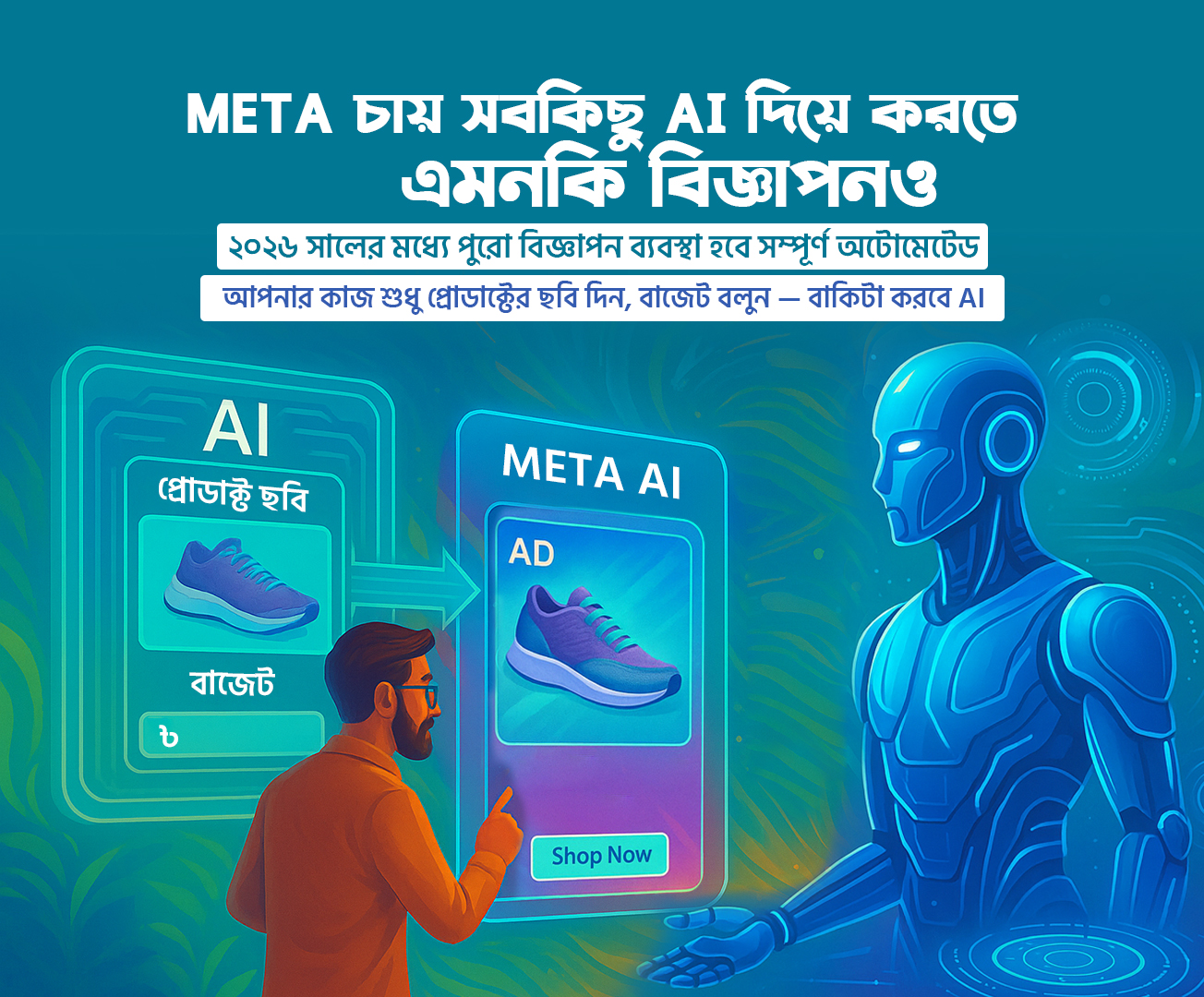
Meta is moving toward a Generative
Ad Model where advertisers will simply provide a product URL, budget, and basic
prompt, and the AI will generate the entire ad campaign from scratch- images,
copy, headlines, and animations.
By the end of 2026, AI is expected
to help create ads with significantly less effort, with Meta planning full
automation of ad creation and targeting through generative AI.
How
the 2026 Algorithm Evaluates Your Ads
The
Pre-Auction Screening Process
Before your ad even competes for
impressions, Andromeda evaluates:
Creative Originality Score Meta's retrieval engine acts like an elite CV scanner - if
your ad looks too similar to others, it's rejected instantly before it even
gets a chance to compete in the auction.
Creative Concept Diversity Creative iteration (changing the hook) does not equal
creative variation (changing the concept). Your ad library should look like a
film festival, not a casting call.
Signal Quality Assessment Signal density is the priority, not immediate ROAS. You are
teaching Meta how different people respond to different stimuli through
creative testing.
The
Auction Process
Once your ad passes pre-screening,
the algorithm evaluates:
Post-Delivery
Learning
Every interaction feeds back into
the learning loop:
2026
Performance Benchmarks: What Good Looks Like
Average
ROAS by Platform (2026)
Facebook ROAS of 2.79 means earning
$2.79 for every $1 spent on ads, with rates between 3-5 considered healthy for
most industries, while anything below 2 suggests campaigns may not be
profitable after factoring in advertising costs.
Cross-Platform Comparison: Typical median ROAS figures for 2025-2026 are: Google Ads
approximately 3.31x, Meta (Facebook/Instagram) approximately 2.19x, and TikTok
Ads approximately 1.41x.
The average ROAS for Meta Ads
(Facebook & Instagram) typically falls in the range of 2.5-4.0, while
average Google Ads ROAS sits between 4.0-8.0 due to its high-intent
environment.
Industry-Specific
ROAS Benchmarks (2026)
Finance & Insurance achieves
600% higher ROAS than Food & Beverage, reflecting higher customer lifetime
values and lower acquisition costs, with the top 25% performers across all
industries achieving at least 2x the industry average.
High ROAS Industries:
Medium ROAS Industries:
Lower ROAS Industries:
Campaign
Type Performance (2026)
Sales campaigns deliver 4.87x median
ROAS compared to 0.52x for Traffic campaigns, and retargeting campaigns deliver
71% higher ROAS than prospecting campaigns.
ROAS by Campaign Objective:
Other
Key Benchmarks (2026)
Facebook CTR averages 1.49%, and if
it's higher than this, your ads are performing better than most competitors,
meaning you'll pay less and enjoy a higher quality score.
In June 2025, the average CPM on
Meta (Facebook + Instagram) was $8.17, with average CPMs on Facebook observed
up to $12.74 in specific campaign types or verticals.
The average Facebook ad conversion
rate across industries in 2025 was 8.95%, with fitness and education industries
showing conversion rates well above that average (e.g., fitness approximately
14.29%).
Proven
Strategies to Maximize Meta Ads Results in 2026
1.
Master Creative Diversity (The #1 Success Factor)
Creative Variation vs. Iteration For years, marketers thought testing ten UGC ads with
slightly different hooks meant creative testing. In 2026, that approach burns
budget, as Meta now rewards true variation - radically different angles, tones,
and creative archetypes.
What True Variation Means:
Volume Recommendations: By feeding the system a mix of your best assets with at
least eight new creatives - specifically one carousel and three images, plus AI
iterations - costs can drop significantly within 24 hours.
2026 Creative Requirements:
2.
Monitor Creative Fatigue Metrics
New 2026 Metrics to Track: Meta rolled out new metrics to help identify when your
creative library needs an update: Creative Fatigue scores, Creative Similarity
(lack of diversity triggers higher CPMs), and Top Creative Themes to identify
which angles are resonating.
Warning Sign: Cost per 1,000 reach (CPMr) is the metric that separates
scale from stagnation. A rising CPMr means you're paying to show the same ads
to the same people, and a healthy CPMr (<$20) means your creative is
expanding your reach to new qualified audiences.
Action Items:
3.
Implement Broad Targeting + Signal Optimization
Targeting Strategy for 2026: Consolidation gives Andromeda the room - and budget - to
learn fast, with the recommendation to run fewer campaigns with more ideas.
Campaign Structure:
Why This Works: Meta doesn't need you to tell it who your customer is - it
needs enough data to infer intent. The more creative inputs you supply, the
faster the system can identify patterns.
4.
Optimize Data Signal Quality
Critical Foundation: Meta no longer needs detailed audience definitions - it
needs clean, strong, and consistent data signals, with businesses competing not
on who configures ads better but on who has the most robust data ecosystem.
Technical Setup:
Why It Matters: Purchases may show up as "direct" or
"organic" when they actually came from Facebook ads due to
attribution loss. To verify, compare ad activity spikes to actual store revenue
increases.
5.
Leverage Advantage+ Automation
2026 Campaign Types:
Performance Gains: Meta's Advantage+ campaigns can deliver 20-30% higher
revenue per dollar spent compared to manual campaign structures.
6.
Use AI Creative Tools Strategically
Herrmann's AI workflow - uploading
your best ads with performance data to Gemini, analyzing why they worked, then
using that insight to generate new concepts - is quietly becoming the standard,
as AI isn't replacing creative teams but giving them x-ray vision.
AI Integration Best Practices:
7.
Master Placement Strategy
All Placements Approach: Restricting ads to "Instagram Reels only" or
"Facebook Feed only" is an outdated tactic that limits the
algorithm's efficiency. By selecting "All Placements" (or allowing
default Advantage+ placements), you enable the system to find the most
cost-effective conversions.
Why This Works: When you upload creative using flexible or dynamic setups,
Meta automatically adjusts sizing and placement. The algorithm knows which
users are likely to convert on Stories versus Feed.
8.
Optimize Bidding Strategy
2026 Bidding Options:
Meta's bidding algorithms are now
predictive, not reactive, meaning the system doesn't just analyze past
performance but forecasts which users are most likely to act profitably,
adjusting bids preemptively.
Best Bidding Strategies:
Scaling Budgets: The old "increase spend 10% every day" rule is
outdated in 2026. Instead:
9.
Focus on High-Intent Actions
Since Facebook now relies more on
short-term feedback loops, long funnels with delayed results are harder to
optimize for, and the algorithm now weighs early funnel actions - like time on
site or scrolling depth - as indicators of quality.
Optimization Priority:
10.
Implement Systematic Testing Framework
A winning ad is not a finished
product - it's a data source. Once a winner is identified, your job is to
understand why it works, then test each element independently with the same
message but different visual, or same visual but different message.
Testing Methodology:
What to Test:
Common
Meta Ads Mistakes to Avoid in 2026
Mistake
#1: Over-Segmentation
Facebook's AI learns better with
broader audiences. If you're still layering multiple interests, you're limiting
scale through over-targeting. Creating dozens of narrow ad sets limits
algorithmic learning and increases costs.
Mistake
#2: Creative Duplication
Iteration (changing colors or
headlines) does not equal variation (changing the concept). Andromeda sees
similar creatives as redundant spam and your ads never even get a chance to
compete.
Mistake
#3: Ignoring New Metrics
The system now identifies
overexposed creatives more quickly - when people see the same ad repeatedly
without acting, your delivery cost goes up and your reach drops. Monitor
Creative Fatigue scores and CPMr religiously.
Mistake
#4: Manual Micromanagement
Meta no longer rewards
micromanagement with constant manual bid tweaks and narrow targeting that now
hurt performance. Instead, the platform rewards stability, data volume, and
strong engagement signals.
Mistake
#5: Neglecting Data Quality
Running campaigns without proper
Pixel + CAPI implementation wastes 20-40% of optimization potential and leads
to inaccurate attribution.
Mistake
#6: Single-Format Strategy
In 2026, 90% of Meta inventory will
be vertical - if your ads aren't designed for 9x16, you're leaving CPM
efficiency on the table. Diversify formats and aspect ratios.
Mistake
#7: Ignoring Privacy Compliance
Advertisers must clearly explain
data use, secure consent, and comply with new rules for audience-building tools
like lookalike audiences. Non-compliance leads to ad disapprovals and account
restrictions.
Mistake
#8: Unrealistic ROAS Expectations
Setting ROAS targets of 10+ when
historical average is 2.0-3.0 confuses the algorithm and hurts performance. Use
industry benchmarks and your profit margins to set realistic goals.
Privacy
& Compliance in 2026
Health
& Wellness Restrictions
Under new rules effective January
2025, Meta began categorizing businesses based on products offered, and
businesses in sensitive categories like health and wellness can no longer send
Meta personal information including mid-level and lower-level funnel data.
Impact:
Who's Affected: Healthcare, wellness supplements, mental health services,
fitness programs, pharmaceutical products
AI
Chat Privacy Policy
What Changed (December 2025): Meta began using interactions with AI features to
personalize content and ads - whether it's a voice chat or text exchange with
AI features, this update helps improve recommendations across platforms so
users are more likely to see content they're interested in.
User Controls: In-app preferences let users dial back ad personalization,
but they are limited to what Meta allows, and many ad preferences need to be
revisited regularly as they can change based on how you use the apps.
Regional Exceptions: Due to GDPR and local privacy laws, AI data usage rules
don't apply in the EU, UK, or South Korea.
Special
Ad Categories
Meta has tightened rules for special
ad categories including housing, employment, credit, financial services, health
and wellness, and political or social issue advertising, with stricter
requirements such as additional documentation and more rigorous verification
processes.
Compliance Requirements:
Future
of Meta Ads: What's Coming in Late 2026
Full
Automation Timeline
According to industry analysts, 2026
will mark the transition to fully automated advertising management, where the
human role evolves from campaign operator to data and signal architect.
What This Means:
Marketer
Role Evolution
By 2026, the concept of
"campaign management" will disappear altogether - algorithms will
independently determine who, when, and what to show, and the marketer's role
will shift toward data strategist who designs interaction between data,
content, and business goals.
New Core Competencies:
Platform
Expansion
As Meta's efficiency peaks, top
brands are quietly expanding into YouTube Shorts, TikTok, and CTV - but only
after Meta is stable, as paid social in 2026 is an ecosystem play where Meta
drives efficiency, YouTube scales intent, TikTok drives discovery, and email
plus direct mail lock retention.
Technical
Setup Checklist for 2026 Success
Tracking Foundation:
Campaign Structure:
Creative Assets:
Compliance:
How
to Interpret Your ROAS in 2026
Understanding
Attribution Challenges
Multi-touch attribution models often
reveal 20-40% lower ROAS than single-platform dashboards suggest because
platforms credit themselves for conversions that involved multiple marketing
touches.
Solution: Always compare platform reporting against your actual store
revenue—if Meta Ads Manager shows $10,000 in attributed revenue but your
Shopify store only grew by $6,000 during that period, your true ROAS is lower
than reported.
Calculating
Break-Even ROAS
The 2.19:1 average Facebook ROAS is
just a starting point, not your target. What matters is your break-even ROAS
based on your actual margins, then aiming 1.5-3x above that for profitable
growth.
Formula: Break-Even ROAS = 1 ÷ Profit Margin
Examples:
What
Influences ROAS
Different campaign objectives
produce wildly different ROAS - remarketing to cart abandoners delivers 6:1 to
12:1 ROAS while cold prospecting typically generates 2:1 to 3:1.
Key Factors:
Conclusion:
Winning with Meta Ads in 2026
The Meta Ads algorithm in 2026
represents a fundamental shift from manual control to AI-powered optimization.
Meta isn't a media-buying platform anymore—it's a creative discovery engine,
and you can't buy your way out of weak creative, automate your way out of bad
offers, or scale without discipline.
The Path to Success:
The Meta updates in 2026 signal a
complete paradigm shift - if you cling to old systems, the platform will
outgrow you. Manual ads are dying, creative intelligence is taking over, and
marketers who evolve will win bigger than ever.
The advertisers who embrace these
changes - and focus on what matters most (creative diversity, data quality, and
signal optimization) - will see lower acquisition costs, higher ROAS, and
sustainable growth.
The algorithm is no longer your
adversary - it's your strategic partner, one that can learn to understand your
brand if you feed it the right data, time, and creative quality.
Frequently
Asked Questions (2026)
Q: How has the Meta Ads algorithm
changed in 2026?
A: Meta introduced Andromeda, which is 100x faster at matching people to ads
and can handle 10,000x more ad variants in parallel, fundamentally changing the
system from manual targeting to AI-powered creative discovery.
Q: Do I still need to set audience
targeting in 2026?
A: The platform no longer wants you to manage ads but instead declare your goal
and let AI handle the rest, with manual targeting becoming obsol.